
UX AI Design 2026: The Future of Intelligent User Experiences
What Is UX AI Design?
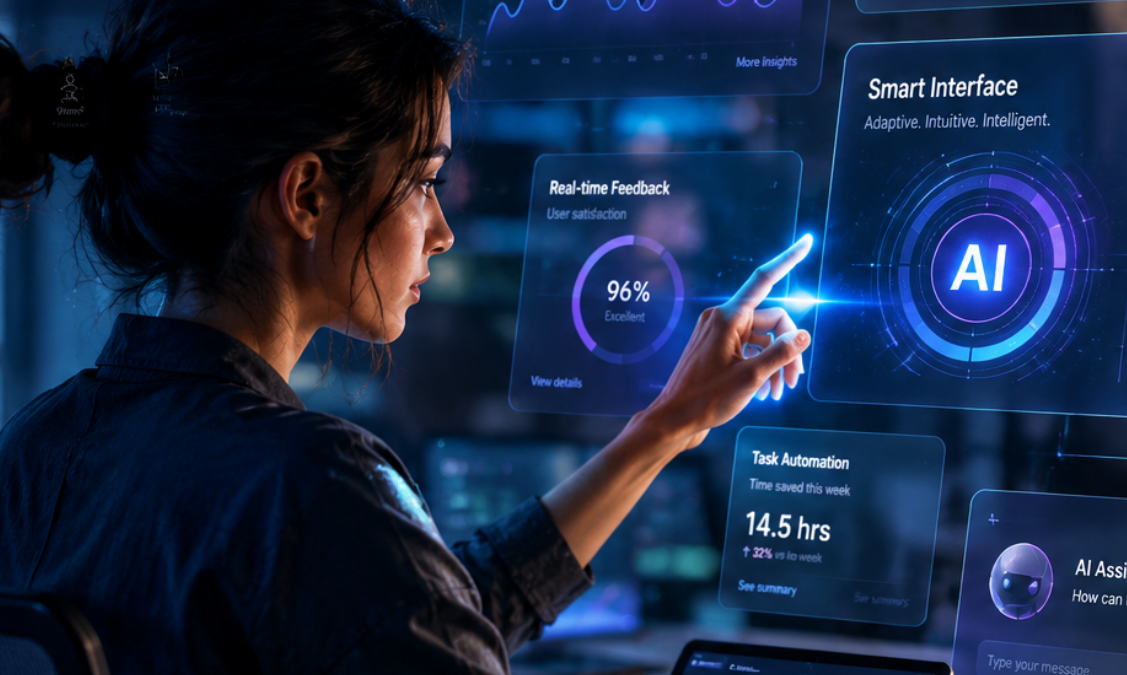
UX AI Design 2026 is transforming the way digital products are designed, tested, and optimized. Artificial intelligence is no longer just a supporting technology—it has become an essential part of the user experience design process. From AI-powered personalization and predictive interfaces to automated user research and accessibility improvements, designers are leveraging intelligent tools to create faster, smarter, and more human-centered experiences. As businesses compete to deliver exceptional digital products, understanding the latest UX AI trends is becoming critical for designers, product teams, and organizations alike.
The 5 Pillars of UX AI Design in 2026
1. Personalization
AI-powered personalization is one of the most influential aspects of UX AI Design in 2026. Modern users expect digital experiences tailored to their unique preferences, behaviors, and goals. By analyzing user interactions, browsing history, and engagement patterns, AI can deliver customized content, recommendations, and interfaces. This level of personalization improves user satisfaction, increases engagement, and helps businesses build stronger relationships with their audiences.
2. Prediction
Predictive UX leverages machine learning algorithms to anticipate user needs before they occur. Instead of reacting to user actions, AI-powered systems proactively suggest relevant content, products, or next steps. From predictive search results to intelligent recommendations, this approach reduces friction and helps users achieve their goals more efficiently. As AI models continue to improve, predictive experiences are becoming a standard expectation across digital products.
3. Accessibility
AI is playing a significant role in making digital products more inclusive and accessible. Advanced technologies such as speech recognition, real-time translation, image recognition, and automated captioning help ensure that applications can be used by people with diverse abilities. By integrating accessibility into the design process, organizations can create experiences that reach wider audiences while complying with accessibility standards and regulations.
4. Transparency
As AI becomes more involved in decision-making processes, transparency is essential for maintaining user trust. Users should understand how AI-generated recommendations, content, or decisions are produced. Clear explanations, transparent communication, and ethical AI practices help users feel more confident when interacting with intelligent systems. Building trust through transparency is becoming a critical requirement for successful AI-powered products.
5. Human Oversight
While AI can automate many tasks and improve efficiency, human oversight remains crucial. Designers, researchers, and product teams must continuously evaluate AI-generated outputs to ensure accuracy, fairness, and ethical compliance. Human-centered design principles ensure that technology serves people rather than replacing critical human judgment. The most successful digital products combine AI efficiency with human expertise.
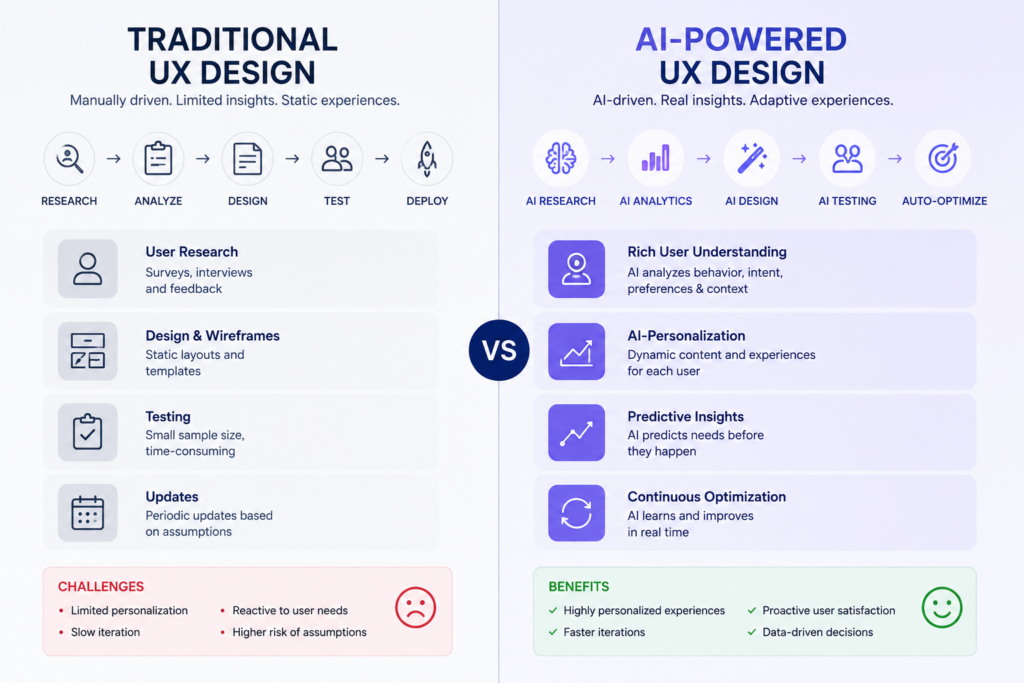
Traditional UX vs AI-Powered UX
| Feature | Traditional UX | AI-Powered UX |
|---|---|---|
| Personalization | Limited | Dynamic |
| Recommendations | Rule-based | Machine learning |
| User Research | Manual | Automated insights |
| Accessibility | Static | Adaptive |
| Optimization | Periodic | Continuous |
Traditional UX relies heavily on manual research, static user journeys, and periodic optimization cycles. In contrast, AI-powered UX continuously learns from user behavior and adapts experiences in real time. This allows organizations to deliver more relevant interactions, improve engagement, and increase customer satisfaction.
AI Tools Every UX Designer Should Know in 2026
| 🤖 Tool | 🎯 Best For | 🔗 Website |
|---|---|---|
| ChatGPT | UX research, personas, content generation | ChatGPT/OpenAI |
| Figma AI | UI generation, design systems, wireframes | Figma AI |
| Galileo AI | Generate UI screens from prompts | Galileo AI |
| Uizard | Wireframes and rapid prototyping | Uizard |
| Maze | UX testing and user research | Maze |
| Adobe Firefly | AI-generated visuals and graphics | Adobe Firefly |
| Notion AI | Documentation and product requirements | Notion AI |
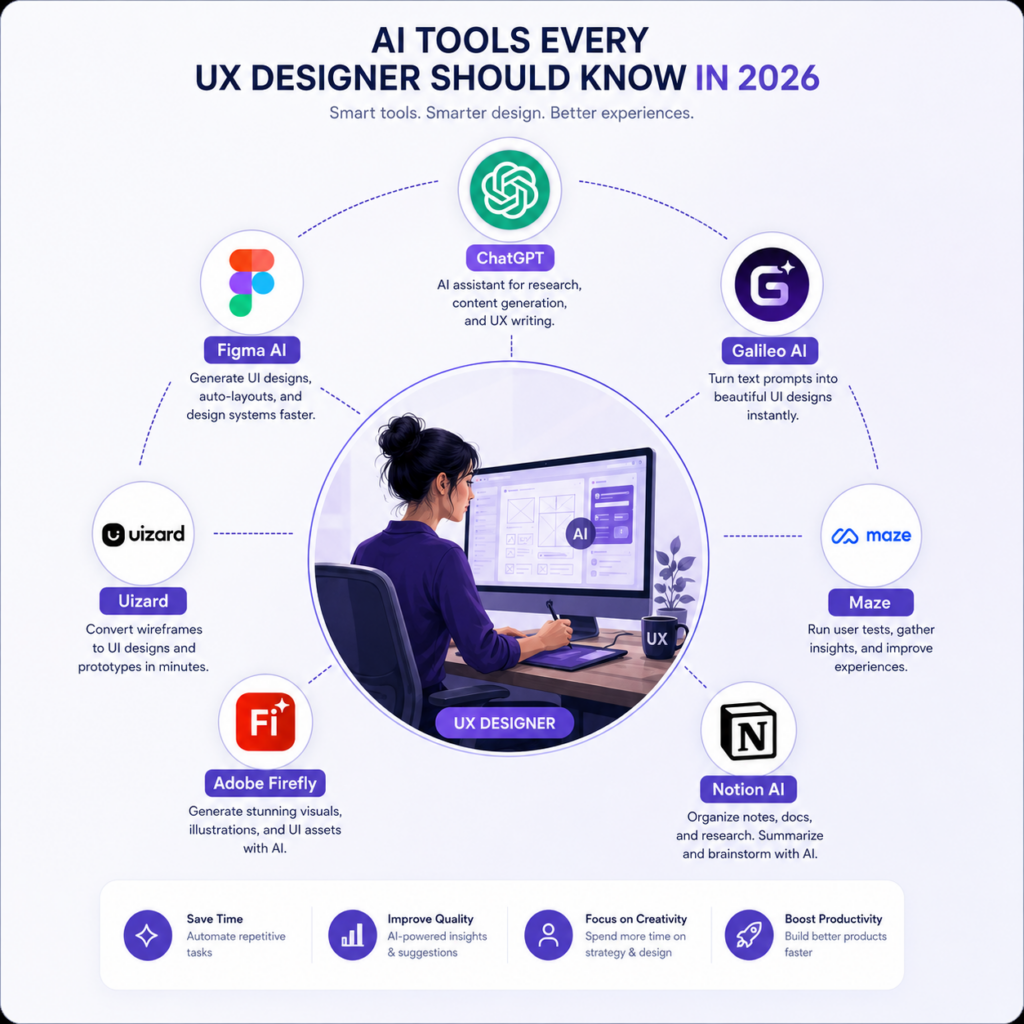
Each of these AI tools serves a different purpose within the UX design process. ChatGPT supports content generation and research, Figma AI accelerates interface design, Galileo AI transforms prompts into wireframes, and Maze provides valuable user testing insights. Meanwhile, Adobe Firefly enables designers to create visual assets quickly, while Uizard simplifies the prototyping process for teams of all skill levels.
The most effective UX designers in 2026 will not rely on a single AI tool but will combine multiple technologies to create efficient workflows. By integrating AI into research, ideation, design, testing, and optimization, designers can spend less time on repetitive tasks and more time delivering meaningful experiences that solve real user problems.
Challenges and Ethical Considerations
Despite its many advantages, UX AI Design also introduces significant challenges that organizations must address responsibly. One of the biggest concerns is data privacy. AI systems often rely on large amounts of user data to generate personalized experiences, making it essential to collect, store, and process information securely and transparently.
Bias in AI models is another critical challenge. If training data contains biases, AI systems may unintentionally produce unfair or discriminatory outcomes. Designers and developers must continuously monitor AI-generated recommendations and ensure that systems remain fair and inclusive for all users.
Transparency is equally important. Users should understand when they are interacting with AI and how important decisions are being made. Clear communication helps build trust and prevents confusion. Additionally, organizations should maintain human oversight over AI-powered systems to ensure ethical decision-making and accountability. As AI continues to evolve, balancing innovation with responsibility will remain a key priority for UX professionals.
Future Trends of UX AI Design
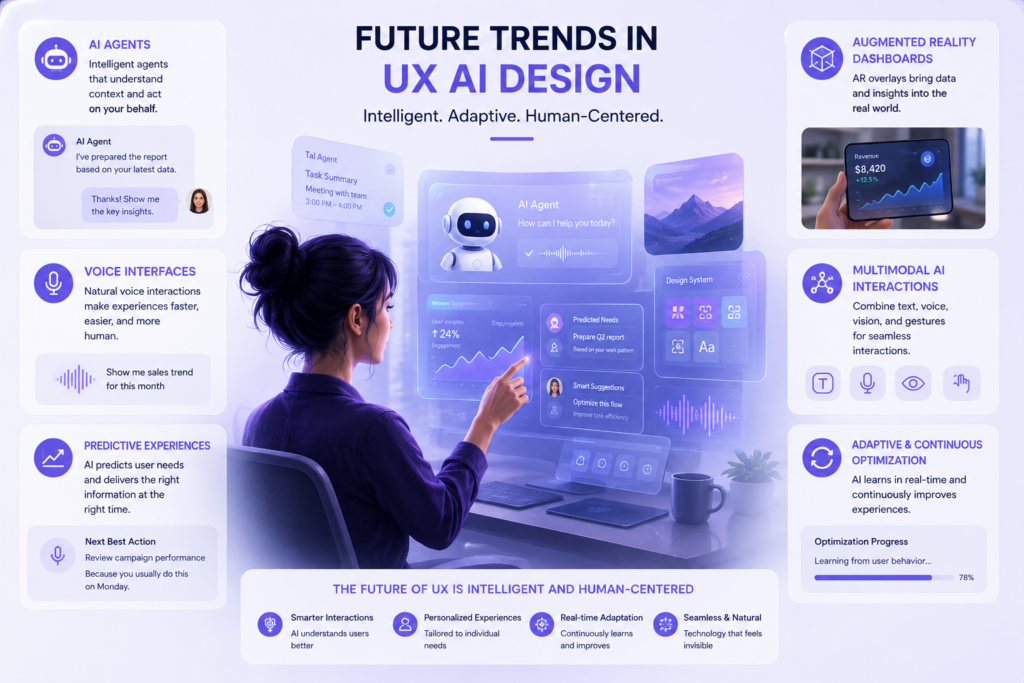
The future of UX AI Design extends far beyond simple automation and personalization. One emerging trend is multimodal AI, which enables users to interact with digital products through text, voice, images, and gestures simultaneously. These richer interactions create more natural and intuitive user experiences.
AI agents are also expected to become increasingly common. Instead of simply responding to commands, intelligent agents will proactively assist users by completing tasks, making recommendations, and adapting to changing contexts. This shift will redefine how people interact with digital products and services.
Another major trend is predictive user experiences. Future interfaces will anticipate user intentions with greater accuracy, reducing the number of actions required to complete tasks. At the same time, advancements in generative AI will allow designers to rapidly create prototypes, test concepts, and optimize experiences based on real-time user feedback.
As these technologies mature, successful UX design will increasingly focus on creating intelligent, adaptive, and human-centered experiences that combine the power of artificial intelligence with empathy, trust, and usability principles.
Conclusion
UX AI Design 2026 represents a major shift in how digital experiences are created and optimized. While artificial intelligence offers unprecedented opportunities for personalization, efficiency, and innovation, successful products will continue to balance automation with human-centered design principles. Organizations that embrace AI responsibly will be better positioned to deliver meaningful, intuitive, and engaging experiences for users in the years ahead.
About the Author
Reem Abdallah is a UX/UI and Product Designer specializing in SaaS platforms, CRM systems, AI-powered products, and enterprise applications. She combines user-centered design principles with emerging technologies to create scalable and intuitive digital experiences.